Agiou Vasileiou 19, Nea Ionia +30 2111821051



Meteora
Meteora means "suspended in the sky," and this destination is truly much more magical than you can imagine. It is a perfect blend of natural and sacred scenery, giving visitors a sense of the transcendent. You have many reasons why you should visit Meteora, and it's well worth going, even if just for one day!
Program
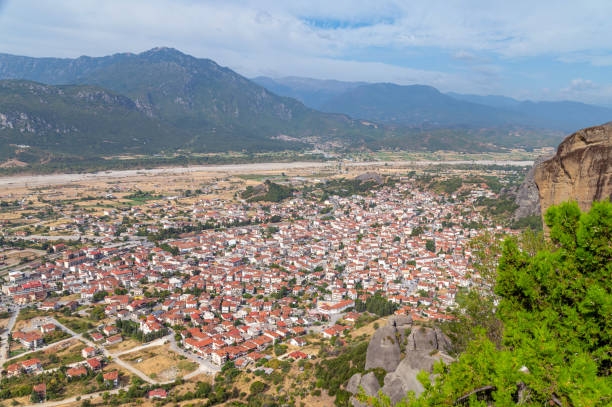
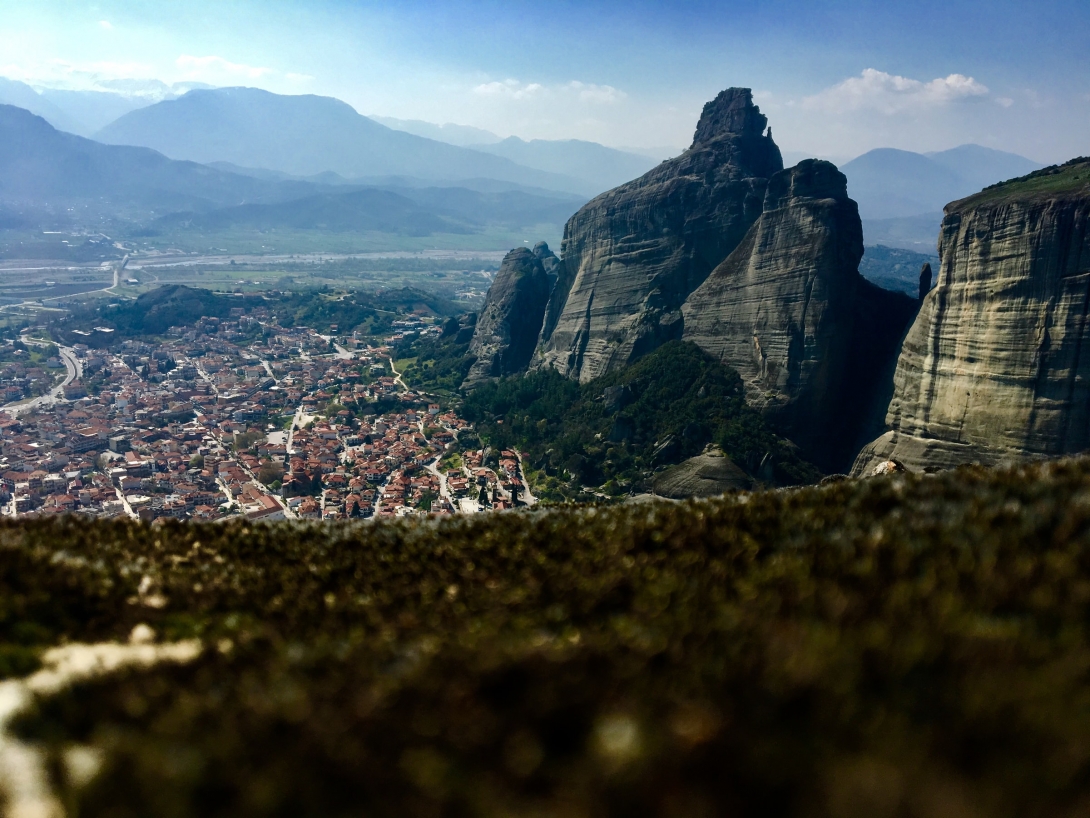
The Holy rocks of Meteora are situated over the town of Kalampaka, on the north-western edge of the Plain of Thessaly in Central Greece. Sandstone steep rocks, rising over 400 meters above the ground, were formed about 60 million years ago as a result of erosion, earthquakes, and geological changes that followed over the centuries, creating this rare natural phenomenon and landscape.
Meteora is one of the biggest and most important groups of monasteries in Greece after those in Mount Athos. We can locate the first traces of their history from the 11th century, when the first hermits settled there. The rock monasteries have been characterized by UNESCO as a unique phenomenon of cultural heritage, and they form one of the most important stations on the cultural map of Greece.
Nowadays, there are six active monasteries to visit on the rocks, all unique, breathtaking, and steeped in religious history.
The most important monasteries of Meteora are:
-
The Holy Monastery of Great Meteoron: This is the biggest of the Meteora monasteries. The main church (Katholikon) was erected in the middle of the 14th century and 1387/88 and decorated in 1483 and 1552. The old monastery is currently used as a museum.
-
The Holy Monastery of Varlaam: This is the second largest monastery after the Great Meteoron. The church, which is of the Athonite type with a spacious esonarthex surrounded by a dome, was built in 1541/42 and decorated in 1548, while the esonarthex was decorated in 1566. The old refectory is used as a museum, while North of the church we can see the parekklesion of the Three (Bishops) built in 1627 and decorated in 1637.
-
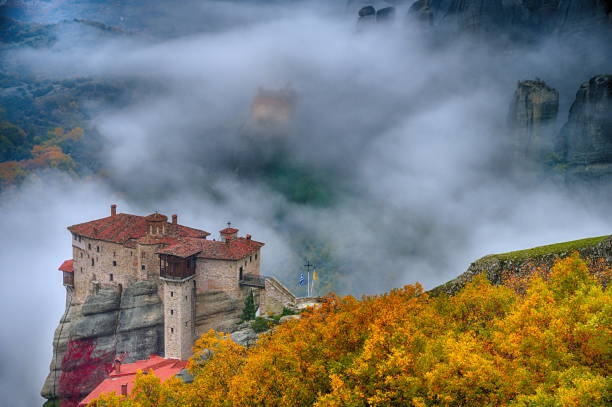
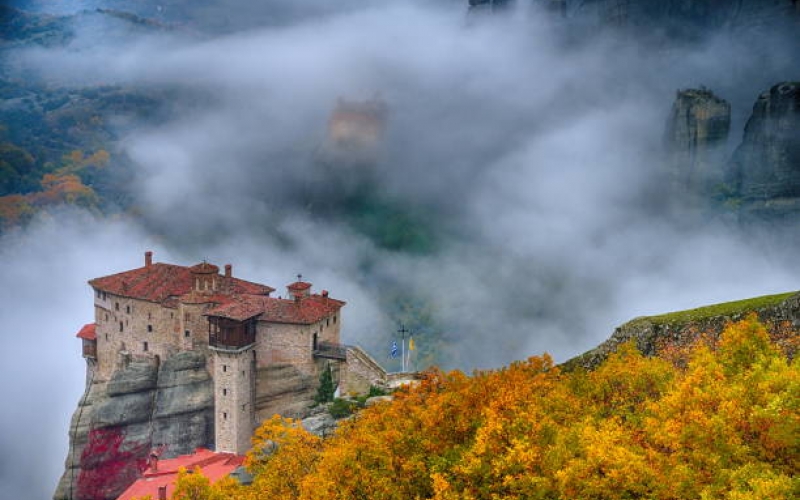
The Holy Monastery of Rousanou: It is dedicated to 'The Transfiguration' but also honored to Saint Barbara. The Katholikon, in the Athonite type, was founded in the middle of the 16th century and decorated in 1560. Both the Katholikon and the reception halls are on the ground floor, while the archontariki (guest house), cells, and subsidiary rooms are scattered in the basement and the first floor.
-
The Holy Monastery of St. Nicholas Anapausas: It is the first one you meet on your way from Kastraki to Meteora. The Katholikon, dedicated to St. Nicholas, is a single-nave church with a small dome, built in the beginning of the 16th century. It was decorated by the Cretan painter Theophanis Strelitzas or Bathas in 1527.
-
The Holy Monastery of St. Stephen: It is one of the most attainable as you do not have to cope with innumerable stairs to reach it. The small single-nave church of St. Stephen was built in the middle of the 16th century and decorated in 1545 or a little later. The Katholikon was built in the Athonite type in 1798. The old refectory of the convent is currently used as a museum.
-
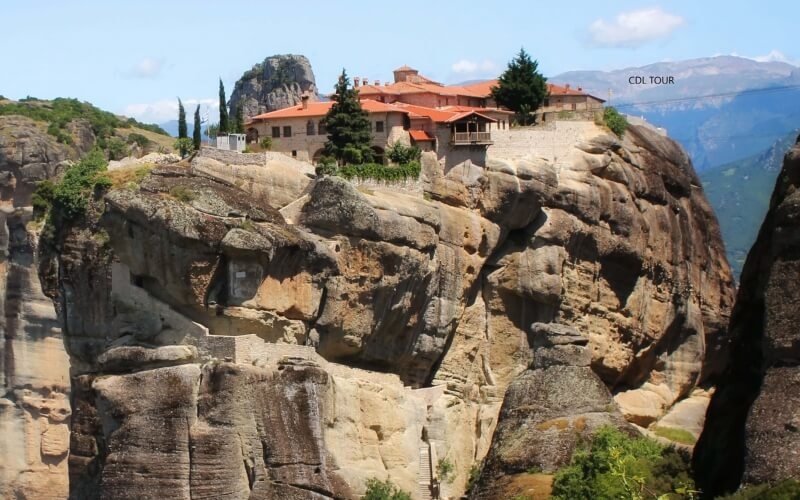
The Monastery of Holy Trinity: This is very difficult to reach. The visitor has to cross the valley and continue high up through the rock before arriving outside the entrance. The church is in the cross-in-square type with the dome based on two columns, built in 1475-76 and decorated in 1741. The spacious barrel-vaulted esonarthex was founded in 1689 and decorated in 1692. A small skeuophylakeion (sacristy) was added next to the church in 1684.
Also, worth seeing:
In Kalampaka
The Byzantine Church of the Dormition of the Mother of God This church, located in the old city, is the most important monument in Kalabaka, erected between the 10th and 11th century on the ruins of an early Christian royal basilica. The marble pulpit, unique in Greece, is situated in the center of the nave. Impressive and appreciated is also the bell tower of the temple, which is located on the northern side of the entrance of the temple compound. Of particular interest is the marble pulpit, which is one of a kind with two staircases, lying on the floor in the center of the nave. It was reassembled, in part, from the material of an early Christian pulpit.
The Digital Projection Centre of Meteora’s History and Culture It is a center where visitors wearing special glasses can watch 3D (three-dimensional) shows depicting: Mythology concerning the Holy Meteora and a show-tour of the Holy Monasteries of Meteora.
Natural History Museum of Kalampaka and Mushroom Museum The Museum contains a rich collection of birds and mammals as well as a comprehensive mushroom museum, the first of its kind in Greece, offering an enjoyable and productive experience.
In Kastraki Village
The Holy Monastery of St. George Mandilas Driving towards the Monastery of St. Nicholas from Kastraki, you will find the monastery of St. George Mandilas, built inside the rock like a small cave. Each year on its celebration day, April 23rd, men climb up and change the headscarves from the previous year and put new ones. It is believed these scarves make miracles.
The “Museum of Geological Formations of Meteora” Visitors are taken 30 million years back in time and are able to see the geological site of Meteora as a sea expanse, slowly developing into the Holy Meteora of today. Entering the Museum, the visitor is taken 30 million years backwards. You are able to see the geological site of Meteora as a sea expanse, slowly developing into the Holy Meteora of today. You can see general icons of Meteora with a video describing the general creation of Meteora and the surrounding mountain of Koziakas. You can also find a general study on geology and its different uses throughout Greece and a detailed analysis of the creation of the Holy Meteora.
In Trikala Area
Prehistoric Cave of Theopetra: A unique archaeological monument and one of the most interesting caverns in Greece from a historical perspective.
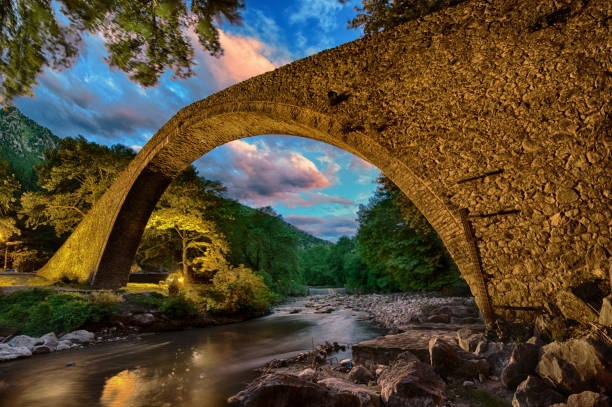
Stone Bridge in Pyli Village: It was built in 1514 by Saint Bessarion and referred to as the bridge of Porta. It connects the mountains of Itamos and Koziakas. By the end of the 1930s, it was the only passage from the lowland tribal villages to the South Pindos.
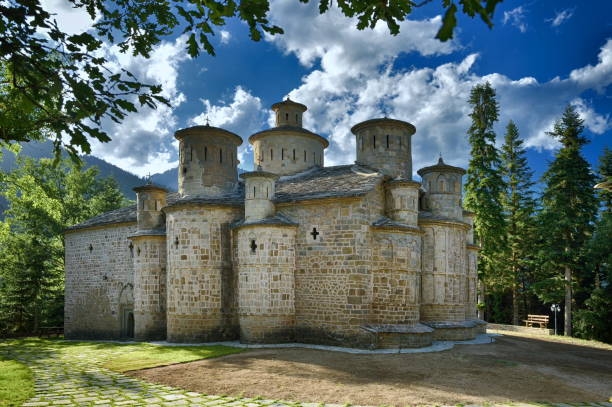
Porta Panagia Church: At the same area, you can see Porta Panagia, the Byzantine church of 1283. This impressive and elaborate temple is classified as an important ancient preserved and historical monument.
The Church of the Holy Cross in Doliana of Krania Aspropotamos: An exceptional post-Byzantine monument of the 18th century.
Dress Code / Respect
While visiting the monasteries, women are required to wear skirts covering the knees and have their shoulders covered. Men are required to wear trousers covering the knees. Most of the monasteries do provide wraps at the entrance.
Extra note
Are you planning a trip to Meteora/Kalampaka with a small or large group? Need transportation, hotel booking, or local dining recommendations? We are able to get you to your destination safely and comfortably! If you’re looking for luxury and reliable coach hire, look no further than us. Start planning your trip, and make a request for a charter quote today! How?
-
Tell us all about your itinerary Fill the form for a quote. Try to give us as many details as you can so that we can give you our best price!
-
We'll find the best solution for you!
-
We'll get in touch within 24 hours to give you the best offer!
Gallery